
Jun 24, 2026
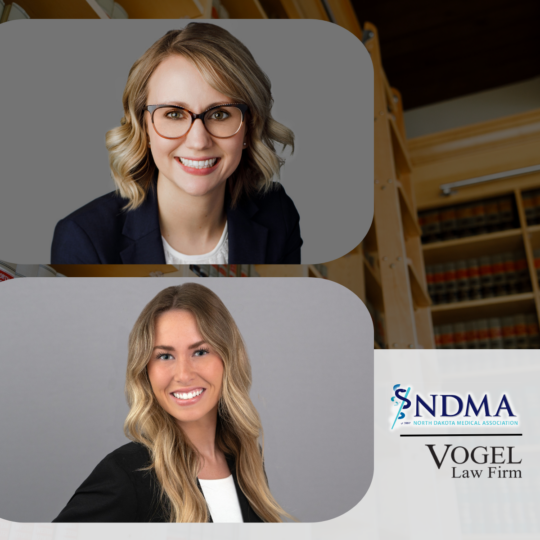
By Attorney Briana L. Rummel and Attorney Olivia M. Erbele. Originally published in the Summer 2026 Edition of the North Dakota Physician.
January 2026, the United States Supreme Court in Berk v. Choy, 146 S.Ct. 546 (2026), unanimously ruled that Delaware state law “affidavit of merit” requirements in medical malpractice cases do not apply in federal court. Specifically, the Court held that because such state requirements conflict with federal procedural rules, they are inapplicable in federal court proceedings.
Relevant to the recent ruling, Delaware state law provides that a plaintiff may not sue for medical malpractice unless a medical professional attests to the merits of the lawsuit in an affidavit accompanying the complaint. In other words, Delaware’s affidavit requirement necessitates an additional filing to commence a medical malpractice action under state law. This requirement is not unique to Delaware. In fact, many states have similar evidentiary requirements, including North Dakota. Expert affidavit statutes like that at issue in Berk were enacted primarily to serve as a gatekeeping mechanism aimed at reducing frivolous litigation which, in turn, is intended to prevent substantial unjustified increases in malpractice insurance.
Importantly, the Berk decision eliminates a procedural requirement for plaintiffs filing medical malpractice cases in federal court in some cases, arguably lowering the plaintiff’s initial evidentiary burden to proceed with a claim. In effect, plaintiffs filing federal medical malpractice actions may not have an obligation to gather expert evidence or expert opinions as early in the proceeding because expert support is not required to initiate litigation. As a practical result, the federal court system might see an influx of medical malpractice suits and defendants could face increased early litigation costs. It may also be more difficult to achieve early favorable resolution without the benefit of early expert review and disclosure.
As a matter of applicable state law, the filing of a medical malpractice action without the requisite affidavit or failure to serve an admissible expert opinion in the form of an affidavit within a specified period following commencement of an action constitutes grounds for dismissal in many jurisdictions. Accordingly, the absence of a required affidavit is a common basis for dismissal of a plaintiff’s medical malpractice suit at the early pleading stage. The Court’s ruling in Berk alters this framework. Without this familiar mechanism, the defense may need to employ more calculated and proactive methods to defend claims in federal court, such as early discovery and motion practice, all at an increased cost.
While nuanced, North Dakota’s expert affidavit statute, Section 28-01-46 of the North Dakota Century Code, differs in important ways from Delaware’s requirement. North Dakota law does not require the filing of an expert affidavit with the complaint. Instead, under North Dakota substantive law, a malpractice plaintiff must serve an admissible expert opinion in the form of an affidavit within three months of commencing suit. It remains to be seen how federal courts will interpret statutes like North Dakota’s following the Supreme Court’s decision in Berk. However, the holding in Berk is likely to increase medical malpractice actions in federal court as a preferred forum by malpractice plaintiffs, at least in the near term. Plaintiffs, unable or unwilling to secure a timely expert affidavit in support of their claim, may increasingly choose to file in federal court to avoid this hurdle and associated expense.
The holding in Berk is likely to increase medical malpractice actions in federal court as a preferred forum by malpractice plaintiffs.
Accordingly, in the face of a federal lawsuit, medical professionals and their legal counsel should carefully evaluate applicable jurisdictional requirements and other relevant legal considerations early in the litigation and remain apprised of developments in this area of the law.
See the full Summer Edition of the ND Physician Magazine here: https://www.ndmed.org/