

Sep 15, 2026
Bismarck sits south and east of the Bakken, but the oilfield runs through this city anyway. Crews stage out of Bismarck-Mandan, families live here while someone works a rotation up north, and the supply and service companies that keep the field running operate from this side of the state.
Understanding oilfield injury hazards in ND means understanding a workplace that constantly changes shape. A well site on Monday is a different set of risks by Thursday, with different contractors, different equipment, and different pressures in the lines. What follows covers the hazards that show up most often, why North Dakota conditions sharpen them, and what happens when a company other than your own employer causes the harm.
Key Takeaways
- Oilfield work concentrates several categories of serious hazards into one changing worksite, including moving equipment, pressurized systems, toxic gas, and flammable vapor.
- Hydrogen sulfide deadens the sense of smell at higher concentrations, so odor is not a reliable warning.
- Manual tank gauging and thief hatch work expose workers to concentrated hydrocarbon vapors and oxygen displacement.
- North Dakota winters add cold stress, reduced dexterity, and ice to tasks that already carry little margin.
- Because most well sites host several employers at once, an injury may involve a company other than the injured worker’s employer.
What Are the Most Serious Oilfield Injury Hazards in ND?
The most serious oilfield injury hazards in ND cluster into four categories: struck-by and caught-between contact with moving equipment, hydrogen sulfide exposure, fires and vapor ignition, and the highway miles that bracket every shift. Extreme weather magnifies all four.
- Most contact injuries involve equipment that was energized, pressurized, or in motion when it should not have been.
- Hydrogen sulfide can incapacitate a worker before they recognize the smell.
- Vapor ignition often comes from an ordinary source such as a running truck engine.
Multiple companies share nearly every North Dakota well site, which matters a great deal when something goes wrong.
Why Is Oilfield Work Different From Other Industrial Jobs?
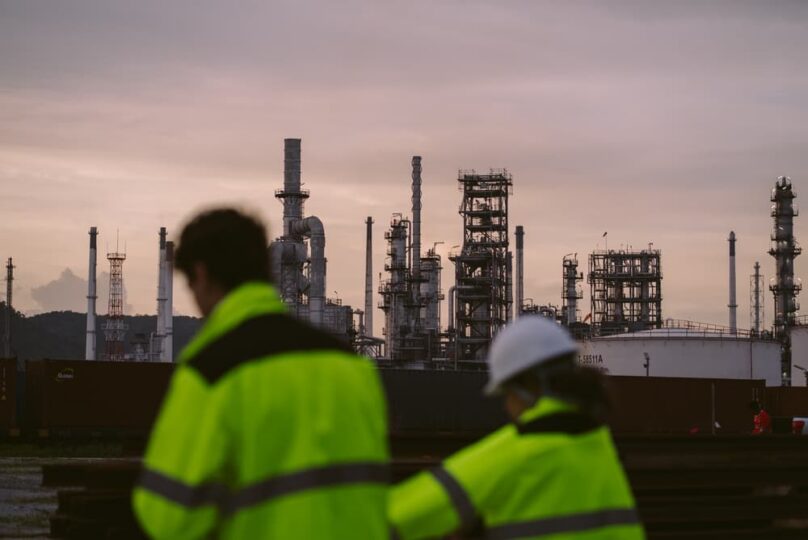
Oilfield work differs because the worksite itself is temporary, crowded with separate companies, and built around stored energy that is always trying to escape. A factory floor is engineered once and stays put. A well pad gets assembled, run hard, and taken apart, often in weeks.
Three features drive the risk. Pressure is present in nearly every system, from mud circulation to flowback. Heavy equipment moves constantly in tight spaces. And the crew on site this week may work for four or five different employers.
That last point shapes everything about oilfield safety and about responsibility afterward. Coordination between companies is where prevention succeeds or fails, and it is also where legal responsibility gets sorted out later.
Struck-By, Caught-In, and Caught-Between Hazards
Contact with moving or pressurized equipment accounts for a large share of severe oilfield injuries. OSHA’s oil and gas extraction hazard guidance identifies moving vehicles, falling equipment, and high-pressure lines as the recurring sources.
Moving equipment and high-pressure lines
Tongs, elevators, slips, and spinning chains all put hands and bodies near forces that do not yield. Pipe handling on the rig floor remains one of the most injury-prone tasks in the industry.
High-pressure lines fail in ways that give no warning. A whipping hose or a pinhole leak in a hydraulic line carries enough force to cause catastrophic injury, and iron that was safe at one pressure is not necessarily safe at another.
Falling objects and derrick work
Anything lifted overhead can come down, and on a rig that includes tools, pipe, and blocks. Derrick stability is its own concern, addressed in OSHA guidance on well servicing derricks and guywire anchor systems.
Work at height compounds it. A fall arrest system that has not been inspected, or an anchor point that was never rated for the load, can turn a routine climb into a serious event.
Nearly all of these injuries trace back to a system that was supposed to be de-energized, isolated, or locked out and was not.
What Makes Hydrogen Sulfide So Dangerous?
Hydrogen sulfide is dangerous because it removes its own warning sign. At low concentrations, it smells strongly of rotten eggs, and at higher concentrations, it rapidly deadens the sense of smell, so a worker can walk into a lethal atmosphere believing the air has cleared.
H2S occurs naturally in oil and gas formations and can be released from wells, tanks, and produced fluids. OSHA’s health hazard guidance for oil and gas extraction covers the exposure routes, and industry practices, including API 49 and API 68, which address drilling and well servicing operations where H2S is expected.
The gas also attacks the equipment meant to contain it. OSHA’s drilling and servicing eTool explains that H2S is highly corrosive and causes metals to thin or turn brittle, so hydrogen embrittlement and sulfide stress cracking can produce the equipment failure that releases more gas.
Protection depends on instruments rather than senses. Personal monitors, fixed detection, escape respirators, and rehearsed evacuation routes are what stand between a release and a fatality.
Fires, Explosions, and Vapor Ignition
Flammable vapors are present at essentially every stage of production, and ignition sources are ordinary rather than exotic. Well gases, hydrocarbon vapors, and H2S can escape from wells, trucks, production equipment, tanks, and shale shakers.
Tank gauging and thief hatches
Opening a thief hatch to gauge or sample a tank releases a concentrated plume of hydrocarbon vapor directly into the worker’s breathing zone. That plume can both displace oxygen and carry toxic components, and it has produced sudden deaths of workers found at the top of tank batteries.
NIOSH and OSHA issued joint guidance on manual tank gauging and sampling for this reason. Automated gauging, remote sampling, and waiting out the vapor release before approaching are the controls that address it.
Ignition from vehicles and hot work
A running engine near a vapor release is an ignition source. Federal hazard alerts have specifically addressed fires and explosions caused by the ignition of vapors by mobile engines and auxiliary motors during drilling, servicing, and production.
Hot work adds the obvious sources. Cutting, welding, and grinding near a system that has not been fully purged is a recurring root cause.
Vehicle placement and engine shutdown rules sound bureaucratic until you understand what they are preventing.
How Does North Dakota Weather Multiply Oilfield Risk?
North Dakota weather multiplies common oilfield risks in Bismarck and throughout the state by degrading workers before it degrades equipment. Cold reduces manual dexterity and reaction time, and a crew member handling iron with numb hands at 20 below has less margin for error than in July.
Winter changes the site physically as well:
- Ice on catwalks, stairs, and rig floors turns routine movement into a fall hazard.
- Cold stress and early hypothermia impair judgment before a worker notices.
- Bulky layers and heavy gloves reduce grip and catch on moving equipment.
- Ground heave and frozen surfaces shift equipment that was leveled in warmer conditions.
- Wind chill shortens safe exposure times far below what the thermometer suggests.
Summer brings its own version. Heat stress in fire-resistant clothing dehydrates workers quickly, and severe storms build fast across open country with limited shelter on a pad.
The practical answer is scheduling and rotation rather than toughness, because the conditions do not negotiate.
Highway Risk: The Hazard That Follows the Crew Home
The drive is part of the job, and it carries real risk. Oilfield work generates enormous truck traffic, including water haulers, sand and proppant trucks, crude haulers, and crew transport, much of it on two-lane highways that were not built for that volume.
For workers based around Bismarck and Mandan, the commute to a Bakken location can run several hours each way. Fatigue at the end of a long rotation is a genuine hazard, and it compounds with winter road conditions on routes such as Highway 83 and the western stretches of I-94.
Collisions involving commercial vehicles serving the oilfield are one of the clearest situations where a company other than a worker’s employer may bear responsibility. The truck that caused the crash usually belongs to someone else entirely.
What OSHA Standards Apply to Oilfield Work in North Dakota?
There is no single OSHA oilfield standard in ND for oil and gas extraction. Exposures in well drilling, servicing, and storage are addressed through the general industry standards in 29 CFR 1910, with construction standards in 29 CFR 1926 applying to activities such as well pad construction and pipeline tie-ins.
The standards that most often come up on a well site include hazard communication and safety data sheets, respiratory protection, lockout and tagout of energized systems, confined space entry, fall protection, machine guarding, electrical safety, and personal protective equipment. OSHA’s oil and gas extraction topic page collects the guidance and hazard alerts that apply.
North Dakota operates under federal OSHA jurisdiction rather than a state plan, so enforcement is handled by federal offices. Industry-recommended practices from API and IADC sit alongside the regulations and often define what reasonable care looks like in practice.
Those industry standards matter beyond compliance. When a company departs from a recommended practice, its own industry writes that departure tends to be persuasive evidence about whether it acted reasonably.
Practices That Actually Reduce Rig Accidents
Prevention on a multi-employer site depends less on individual care than on coordination between companies. The measures that consistently reduce incidents are unglamorous.
What works:
- Job safety analysis performed for the task actually being done, not copied from last week.
- Lockout and tagout applied to every energized or pressurized system before work begins.
- Gas monitoring with calibrated instruments, worn rather than left in a truck.
- Pre-job meetings that include every contractor on the pad, not just one crew.
- Stop work authority that a worker can use without fearing for their job.
- Equipment inspection records kept current rather than reconstructed afterward.
Stop work authority deserves particular emphasis, because it only functions where the culture genuinely supports it. A policy that exists on paper and is discouraged in practice provides no protection at all.
When Someone Other Than Your Employer Caused the Injury
Injury claims against your own employer in North Dakota run through the state’s workforce safety system, and that is not the work our firm does. What we handle is a separate situation where a different company on or around the site caused the harm.
North Dakota law preserves that option. Under chapter 65-01 of the North Dakota Century Code, section 65-01-09 addresses injury through the negligence of a third person and the injured worker’s right to pursue that party.
On a typical well site, the companies that may bear responsibility include:
- The operator or a separate contractor running an adjacent operation.
- A trucking company whose driver caused a collision or an unloading incident.
- The manufacturer of equipment that failed, including pressure iron, valves, or fall protection.
- A maintenance or inspection contractor that certified equipment as sound.
- A service company whose crew created the condition that caused the injury.
- A landowner or operator responsible for site conditions and access roads.
Identifying every company involved early matters more here than in most injury cases, because North Dakota allocates payment by percentage. Under North Dakota Century Code section 32-03.2-02, liability among multiple at-fault parties is several rather than joint, so each generally pays only its own share.
How We Approach Oilfield Third-Party Claims
Our first move in an oilfield injury is to establish who was actually on the pad and what each company was doing. Master service agreements, contractor lists, daily reports, and job safety analyses tell that story, and they are held by companies with no reason to volunteer them.
Equipment evidence is the other early priority. A failed valve, a damaged line, or a fall protection component needs to be preserved before it is repaired, returned to a vendor, or scrapped, and that requires moving within days rather than months.
Our firm has practiced in this region since 1880, and our attorneys handle injury and wrongful death claims across North Dakota and Minnesota. With more than 40 attorneys across our Fargo, Bismarck, and Moorhead offices, we can investigate a multi-company incident at the pace these cases require. Our personal injury and wrongful death matters are handled on a contingency fee basis.
FAQs about Oilfield Injury Hazards in ND
These are questions we hear from oilfield workers and their families around the Bismarck area.
What should happen immediately after a serious incident on a well site?
Medical care comes first, and a worker should be evaluated even when symptoms seem mild, because chemical exposures and head injuries can present slowly. Report the incident through your employer’s process so a record exists. Photographs of the equipment and the scene are valuable, and so are the names of every company that had people on the pad that day.
Who owns the safety records after an incident?
Different companies hold different pieces, which is part of what makes these investigations demanding. The operator, each contractor, and equipment vendors all maintain separate records, and none of them is obligated to hand them to an injured worker on request. Formal preservation demands sent early are how those records get secured.
Does a gas monitor alarm mean the area is unsafe to enter?
An alarm means the atmosphere has reached a set threshold, and the response should follow your site’s procedure, which usually means evacuating upwind rather than investigating. Monitors are configured with alarm points well below immediately dangerous levels for exactly this reason. Treat an alarm as information to act on, not a reading to second-guess.
Can a subcontractor be responsible if the operator ran the site?
Yes, and more than one company can share responsibility for the same incident. Contracts between companies affect how costs are allocated between them, but they do not decide whether a company acted reasonably toward an injured worker. Sorting that out requires reading the agreements alongside what actually happened on site.
What if the injury happened on a drive between sites?
Highway collisions during oilfield work frequently involve a third party, most often another commercial carrier. Those claims proceed against the responsible driver and their company, and federal trucking records can be central to proving them. Those records also have short retention periods, so timing matters.
How long do I have to bring a claim against a third party?
Most personal injury actions in North Dakota must be brought within six years of the injury under North Dakota Century Code section 28-01-16, while wrongful death claims carry a two-year deadline. Physical evidence on a well site rarely survives anywhere near that long. The practical deadline is set by the equipment, not the statute.
Will bringing a claim affect my job?
A third-party claim is brought against a different company rather than against your employer, which is a distinction worth understanding before assuming the worst. Concerns about the working relationship are reasonable and worth raising directly so they can be addressed as part of how a claim is handled.
Talk With Us About an Oilfield Injury
Oilfield work asks people to manage serious hazards well, and most crews do exactly that. When someone is hurt anyway, the question worth asking is whether another company on that site created the condition that caused it.
If you or someone in your family was injured on or around a North Dakota well site, we at Vogel Law Firm would like to hear what happened while the records and equipment still exist. Call our Bismarck office at 701-258-7899, or reach out to us here.